
Payment Risk Management Solutions
Payment Defender helps e-commerce, card-not-present, subscription, and high-risk merchants protect revenue before payment problems become more expensive. Our payment risk solutions connect dispute alerts, chargeback activity, refund history, duplicate-credit risk, VAMP exposure, decline patterns, and payment-performance data so merchants can identify where avoidable losses are occurring and take action earlier.
From increasing approval rates and reducing checkout abandonment to preventing duplicate refunds, mitigating chargebacks, and improving dispute management, Payment Defender gives merchants a clearer view of the entire payment lifecycle. The result is more legitimate transactions approved, fewer unnecessary losses, stronger merchant account performance, and better control over the issues affecting the bottom line.
Who We Help
Where Risk Shows Up
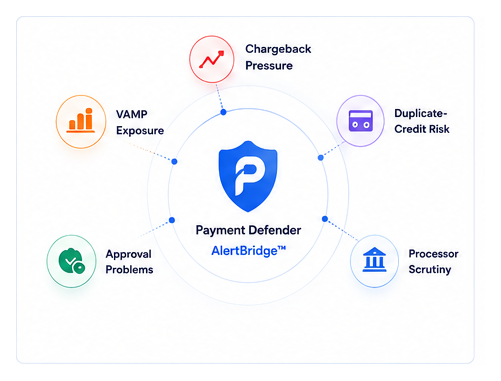
Payment risk shows up differently depending on how the merchant sells, how transactions are processed, and how much scrutiny the account is already under. An e-commerce merchant may be fighting chargebacks and refund disputes. A card-not-present business may be dealing with fraud reports, issuer claims, and failed-payment recovery. A high-risk merchant may need to explain chargeback activity, VAMP exposure, refund behavior, and approval performance to a processor, acquirer, PayFac, ISO, MSP, or portfolio manager.
E-Commerce Merchants
Online merchants often see disputes, refunds, declines, customer complaints, gateway records, and chargeback activity spread across different tools. Payment Defender helps bring those signals together so the next action is based on the full payment story, not one disconnected alert.
Card-Not-Present Businesses
Card-not-present merchants face more fraud and dispute exposure because the transaction happens without a physical card. Payment Defender helps review transaction history, refund activity, alert status, and dispute context before a refund, chargeback response, or escalation moves forward.
High-Risk Merchants
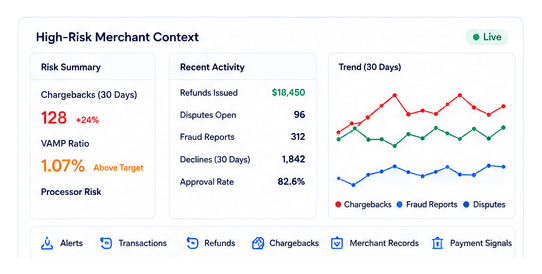
High-risk merchants often need to explain chargeback trends, refund behavior, fraud reports, VAMP pressure, decline patterns, and processing performance to processors or acquirers. Payment Defender helps organize that context so merchant account risk conversations are easier to support with clear records.
Payment Problems
Problems We Solve
Avoidable loss usually builds across more than one payment problem. Chargebacks, duplicate credits, VAMP pressure, approval issues, processor scrutiny, and disconnected operations can all point to the same deeper issue: merchants do not have enough context before the next action is taken. Payment Defender helps connect the payment records behind dispute alerts, refunds, chargebacks, fraud reports, and payment performance so merchants can see where risk is building and what needs attention first.
Excessive Chargebacks
Too many chargebacks can raise fees, increase processor scrutiny, damage merchant account stability, and create pressure with acquirers or portfolio managers. Payment Defender helps merchants review chargeback pressure alongside dispute alerts, refund history, reason codes, transaction records, and payment activity so the issue is easier to understand before it grows.
VAMP Pressure
VAMP pressure can build when fraud reports, disputes, and transaction volume are not reviewed together. Merchants may see the chargeback problem first, but the broader risk picture can include TC40-style fraud signals, dispute records, transaction count, and payment volume. Payment Defender helps make VAMP-related signals easier to see so ratio pressure is easier to explain.
Duplicate Credits
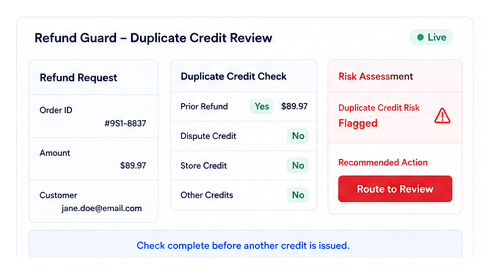
A customer may receive a manual refund, then later receive an automatic dispute credit on the same transaction. That overlap can happen when refunds, alert outcomes, and dispute-resolution activity are handled in different systems. Refund Guard helps check prior credits and refund history before another resolution is triggered.
Processor Risk
Processors and acquirers may question merchants when chargebacks, refund patterns, fraud reports, declines, VAMP pressure, or account activity look uncontrolled. Payment Defender helps organize the supporting records behind those risk signals so merchants can explain what happened, what was reviewed, and what actions were taken.
Payment Declines
Issuer behavior, BIN performance, routing issues, failed payments, and decline patterns can block good transactions before revenue is captured. Payment Defender helps merchants review payment-performance signals alongside dispute and chargeback activity so revenue loss and risk pressure are not treated as separate problems.
Chargeback and VAMP
Control Payment Risk
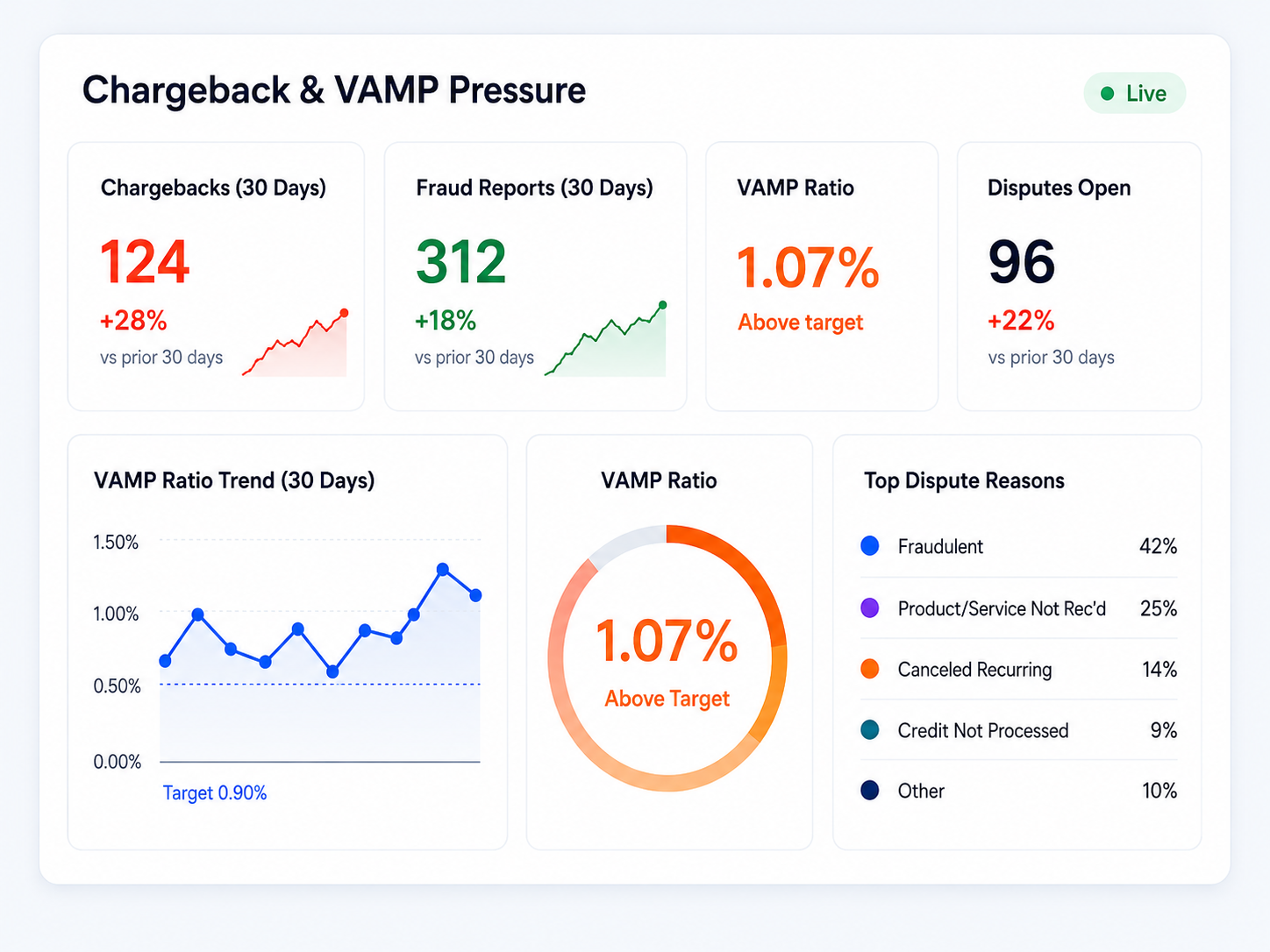
Chargeback mitigation and VAMP visibility start with the same payment story: what the cardholder reported, what the issuer filed, whether an alert was delivered, whether money already moved, whether a refund already happened, and how those signals affect the merchant profile. Payment Defender helps merchants connect that context earlier so chargeback activity, fraud reports, dispute alerts, and VAMP ratio pressure are easier to understand and explain.
Chargeback Management
Chargeback mitigation starts before the case becomes harder to manage. Payment Defender helps merchants connect dispute alerts, transaction details, refund history, reason codes, chargeback status, and outcomes so the next response is based on the full payment story and each case is easier to resolve, route for review, or track over time.
- Review alert context
- Track dispute activity
- Connect refund history
- Support response decisions
VAMP Monitoring
VAMP pressure can build when fraud reports, disputes, and transaction volume are not watched together. Payment Defender helps merchants review fraud signals, dispute activity, payment volume, and ratio pressure in one place so exposure is easier to understand before it becomes harder to explain to processors, acquirers, or portfolio managers.
- Watch fraud reports
- Review dispute activity
- Track ratio pressure
- Connect payment volume context
How Payment Defender Helps
Manage Payment Risk
Payment Defender brings five connected services into one operating view to help merchants manage disputes, refunds, chargebacks, friendly fraud, VAMP exposure, and payment risk. AlertBridge™ serves as the decision layer, connecting each alert to the transaction records and merchant rules needed before the next action is taken. Refund Guard™ helps prevent duplicate credits, Chargeback Shield™ organizes formal dispute activity, Transaction Proof™ protects legitimate sales from qualifying friendly-fraud claims, and Fraud Signal™ gives merchants earlier visibility into the fraud activity affecting their risk profile.
Together, these products help merchants act earlier across the entire dispute lifecycle. Payment Defender can clarify a questioned transaction, resolve an eligible alert, confirm whether a refund already occurred, manage a case that becomes a chargeback, and monitor the TC40 fraud activity contributing to VAMP exposure. The result is a more complete way to protect revenue, reduce avoidable losses, and understand what is happening before payment risk becomes more expensive.
AlertBridge™
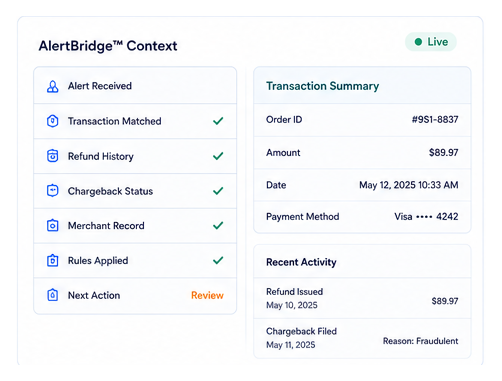
AlertBridge™ connects dispute alerts to transaction history, refund activity, chargeback status, merchant records, and decision rules before the next action is routed. Instead of treating an alert as a single notification, AlertBridge™ brings the supporting payment context together so merchants can understand what happened, whether money has already moved, and which action makes sense. Eligible cases can move toward resolution, while exceptions are surfaced for review and every outcome is recorded in one connected process.
Refund Guard™
Refund Guard™ helps identify duplicate-credit risk before another refund or dispute resolution moves forward. It checks whether the customer has already received a manual refund, store credit, automatic dispute credit, or another form of reimbursement that may not be visible in the alert alone. By connecting those records before money moves again, Refund Guard™ helps merchants prevent duplicate refunds, reduce avoidable losses, and maintain a clearer history of every credit issued.
Chargeback Shield™
Chargeback Shield™ gives merchants a clearer way to manage disputes that continue into the formal chargeback process. It connects open cases, reason codes, evidence status, alert outcomes, response activity, and deadlines so merchants can see what requires attention and what has already happened. Keeping each case organized from intake through resolution helps reduce missed actions, improve response consistency, and make growing chargeback exposure easier to monitor.
CHARGEBACK CASE FLOW
Dispute opened
Reason code reviewed
Evidence status checked
Alert outcome connected
Response tracked
Transaction Proof™
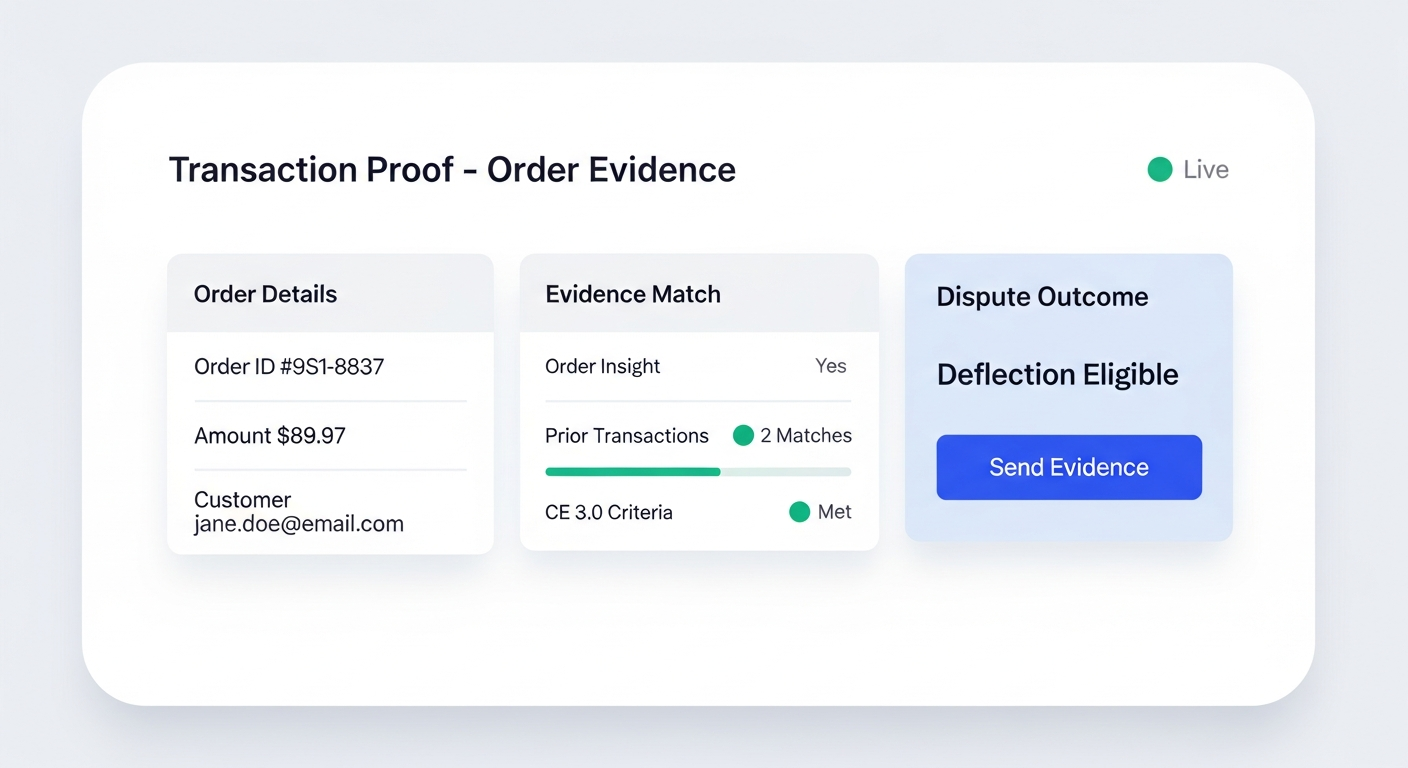
Transaction Proof™ combines enhanced order information with qualifying historical transaction evidence to help merchants protect legitimate card-not-present sales from friendly fraud and first-party misuse. When a cardholder questions a purchase, Payment Defender can provide detailed transaction, customer, product, fulfillment, and order information that helps the issuing bank and cardholder understand the charge.
For qualifying Visa disputes, Transaction Proof™ also uses Verifi Order Insight and Visa Compelling Evidence 3.0 to identify prior transactions that may establish a legitimate relationship between the merchant and cardholder. When the required evidence matches, an eligible dispute may be deflected before it becomes a chargeback, helping the merchant retain legitimate revenue and reduce unnecessary dispute activity.
Fraud Signal™
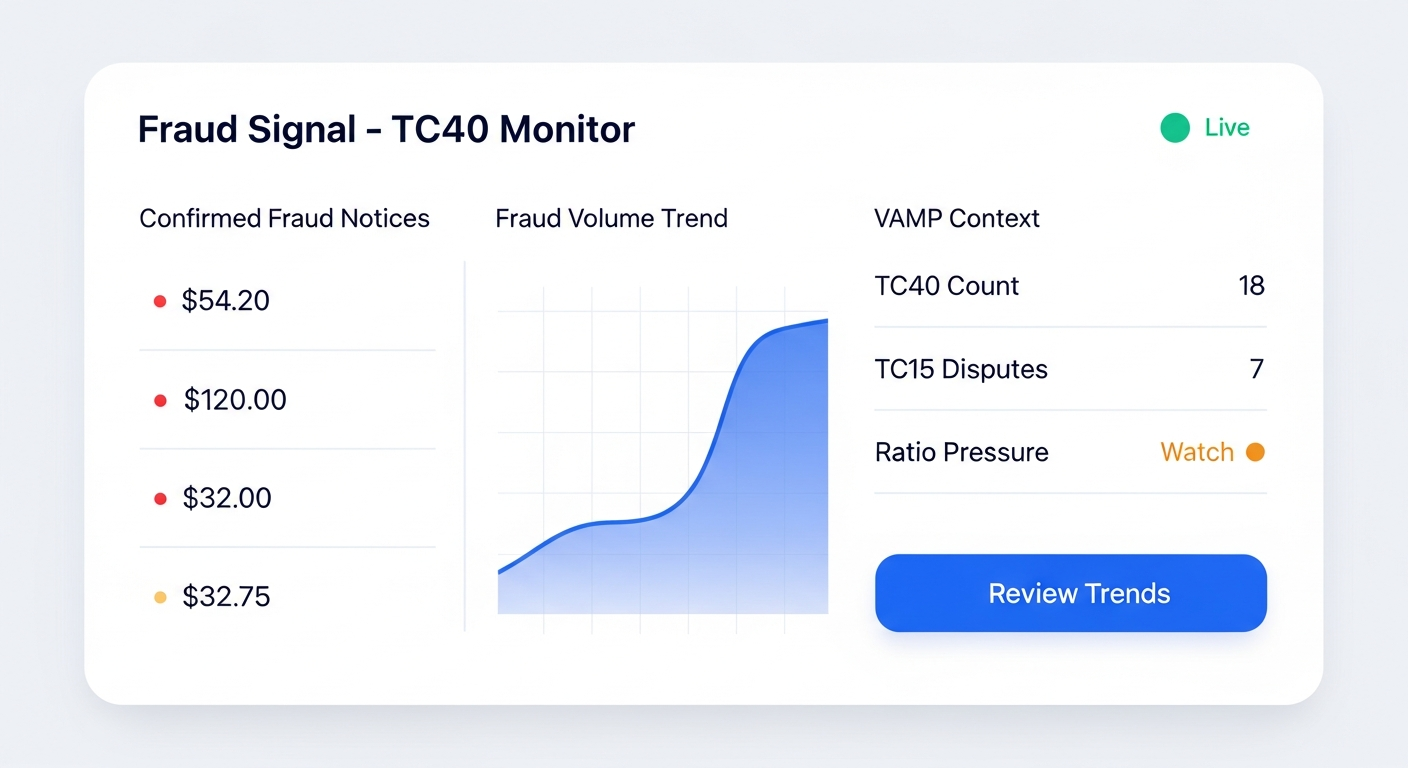
Fraud Signal™ gives merchants earlier visibility into Visa confirmed-fraud notifications, including TC40 activity that may not yet appear as a chargeback. Payment Defender ingests the fraud data, connects each notice to the underlying transaction, and helps merchants identify changes in fraud volume, issuer activity, and recurring risk patterns.
When combined with TC15 dispute activity and settled card-not-present transaction volume, Fraud Signal™ also provides important context for monitoring VAMP exposure. Merchants can see which transactions and trends are increasing fraud pressure, understand how the ratio is changing, and respond earlier with stronger fraud controls, dispute-prevention strategies, and processor-facing reporting.
Threshold Defense™
Payment Defender helps merchants review VAMP exposure, approval problems, decline patterns, issuer behavior, BIN performance, failed-payment recovery, and payment-performance signals alongside dispute and refund data. That broader view helps show where risk pressure and revenue loss may be connected. Merchants can identify patterns earlier, understand which issues are affecting approval rates or account health, and make better decisions before those problems become more expensive.
Approval and loss trend
Top drivers
Issuer mix
- Bank of America32%
- Chase28%
- Wells Fargo22%
- Citi18%
High-Risk Merchants
Control Risk and Protect Revenue
High-risk merchants face pressure across every stage of the payment lifecycle. Approval declines, chargebacks, fraud reports, refund abuse, duplicate credits, VAMP exposure, processor scrutiny, and customer disputes can all affect revenue and merchant account stability at the same time. Payment Defender brings dispute alerts, transaction history, refund activity, chargeback status, and payment-performance signals into one connected view so merchants can see where losses are starting and act before the problem grows.
AlertBridge™ connects eligible alerts to the records needed to make a stronger decision. Refund Guard™ checks whether money has already moved and helps prevent duplicate-credit losses, while Chargeback Shield™ keeps active disputes, reason codes, evidence status, and outcomes organized. Merchants can also monitor VAMP pressure, review chargeback trends, identify patterns behind declining approval rates, and better understand whether losses are being driven by fraud, fulfillment, billing, routing, or customer-service issues.
The goal is not simply to defend a high-risk merchant account after problems appear. Payment Defender helps create a more controlled payment operation that supports dispute resolution, chargeback mitigation, approval performance, and long-term account stability. That means fewer avoidable losses, more visibility into payment risk, and stronger control over the issues affecting the bottom line.
What Merchants Need to Explain
- Why chargebacks increased
- Whether refunds already happened
- How fraud reports and disputes are trending
- What VAMP exposure looks like
- Where duplicate credits may have occurred
- What payment-performance issues are showing up
- What actions were taken to control exposure
How Payment Defender Supports It
- Connects alerts, refunds, chargebacks, and payment data
- Shows the records behind the risk signal
- Helps document what was reviewed
- Makes the next action easier to explain
- Supports cleaner processor and acquirer conversations
- Gives high-risk merchants a clearer operating view
- Helps connect dispute management with payment performance
Risk Review
Find the Pressure Points
Request a demo and we'll assess where disputes, refunds, VAMP exposure, chargebacks, duplicate credits, processor scrutiny, approval problems, decline patterns, and payment-performance issues may be creating avoidable pressure.